Title: Fundamental quantity and equations for electromagnetics from classical to quantum
Speaker: Professor Eng Leong Tan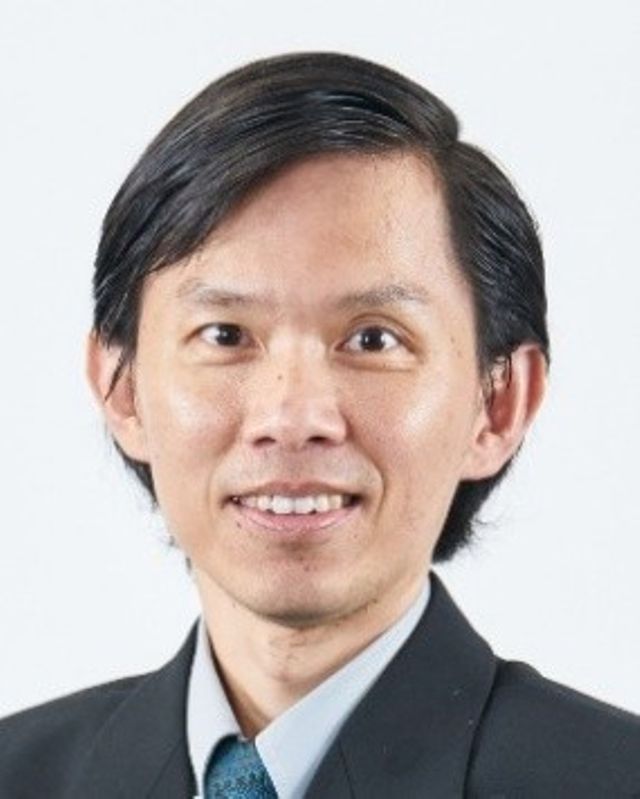
Time: 10:30-11:30 AM, July 25, 2026
Location:
Room 3412, A3 Building of the Purple Mountain Laboratory, No. 9 of Mozhou East Road, Jiangning District, Nanjing, P. R. China
Organization:
IEEE Nanjing Section AP-S/MTT-S/EMC-S Joint Chapter
State Key Laboratory of Millimeter Waves
School of Information Science and Engineering
The New Generation Information Communication and Industry Committee of Nanjing WRSA
Southeast University WRSA
Abstract: It has been more than 160 years since Maxwell presented his equations of electromagnetics (EM) in 1864. Today, these equations have been written in our familiar beautiful form, in terms of fields (E and B) typically and potentials (A and phi) occasionally. However, since Maxwell-Hertz-Heaviside era, there have been longstanding dilemma to use either fields or potentials (or both) for EM, and for the potentials, which gauge condition should be imposed, e.g. Lorenz gauge, Coulomb gauge, etc. The present talk will introduce new gauge-invariant physical quantity of field-impulses for new fundamental equations of electromagnetics. Unlike the potentials that are gauge-dependent and may not be physical nor causal, the field-impulses are like fields being gauge-independent, physically real, causal and measurable. Using single wave equation in terms of electric field-impulse can provide the complete description of all electromagnetics. The electric field-impulse is the single physical quantity that can unify not only electrodynamics but also electrostatics and magnetostatics, which otherwise remain independent and left separated all this while. It can completely embed all fields and potentials attributed to static, dynamic, steady or nonsteady charge and/or current distributions. The field-impulses facilitate the development of finite-difference time-domain (FDTD) method for EM simulatons, even including electrostatics (recall that traditional Yee’s FDTD has no static charge which calls for Poisson/Laplace equation!). Moreover, unlike the fields that under-describe quantum-EM, the field-impulse can explain the Aharonov-Bohm (AB) effect and appear naturally in Schrodinger equation. The field-impulses not only resolve the century-old field-potential/gauge dilemma, but also aptly describe quantum-EM interactions. They constitute the fundamental physical quantities that are promising for replacing fields, potentials, and ultimately Maxwell equations from classical to quantum. Theoretical formulation and efficient computation with fundamental implicit schemes of FDTD methods will be presented. Several mobile apps for technology-enhanced-learning of electromagnetics and transmission line circuits will also be demonstrated if time permits.
Biography of the Speaker:
Eng Leong Tan (SM’06) received the B.Eng. (Electrical) degree with first class honors from the University of Malaya, Malaysia, and the Ph.D. degree in Electrical Engineering from Nanyang Technological University (NTU), Singapore. From 1999 to 2002, he was with Institute for Infocomm Research, Singapore and since 2002, he has been with the School of Electrical & Electronic Engineering, NTU. His research interests include computational electromagnetics (CEM), multi-physics (including quantum, acoustics, thermal), RF/microwave circuit and antenna design. He has published more than 150 journal papers and presented more than 100 conference papers. He and his students received numerous paper and project awards/prizes including: 2019 Ulrich L. Rohde Innovative Conference Paper Award on Computational Techniques in Electromagnetics, First Prize in 2014 IEEE Region 10 Student Paper Contest, First Prize in 2014 IEEE MTT-S Student Design Contest on Apps for Microwave Theory and Techniques, First Prize in 2013 IEEE AP-S Antenna Design Contest, etc. He was the recipient of the IEEE AP-S Donald G. Dudley Jr. Undergraduate Teaching Award with citation: “For excellence in teaching, student mentoring, and the development of mobile technologies and computational methods for electromagnetics education.” He has been actively involved in organizing many conferences and workshops, including General Chair of PIERS 2017 Singapore, TPC Chair of ICCEM 2020, APCAP 2018 (Auckland) and 2015 (Bali), as well as TPC Chair of IEEE APS/URSI 2021. He is a Fellow of ASEAN Academy of Engineering and Technology, and a Fellow* of the Electromagnetics Academy in recognition of distinguished contributions to “Computational electromagnetics and education”. He has been appointed as the IEEE AP-S Distinguished Lecturer for 2025-2027 and MTT-S Speaker for TC-1 Field Theory and Computational EM Committee Speakers Bureau. He is also a member of the AP-S TC-5 Electromagnetics and Fundamentals Committee.
报告题目:Fundamental quantity and equations for electromagnetics from classical to quantum
报告人:Eng Leong Tan教授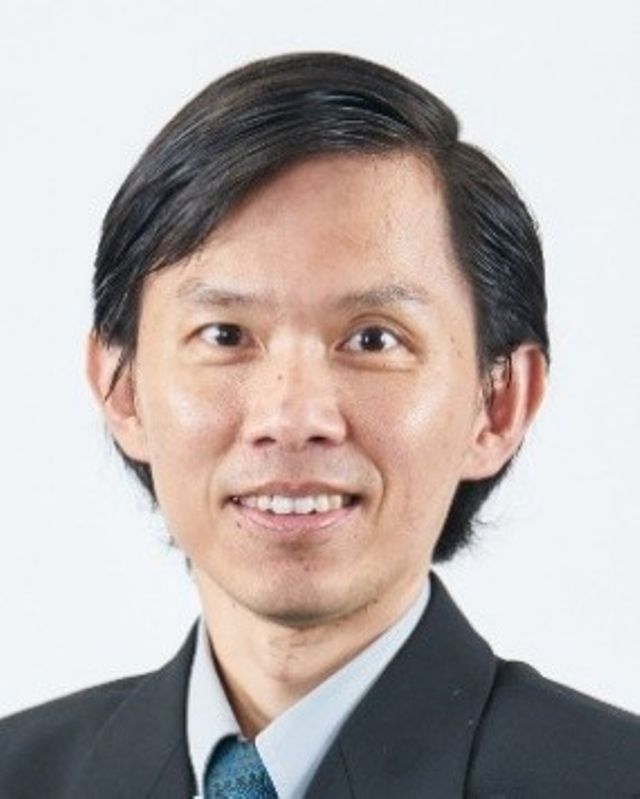
时间: 2026年7月25日上午10:30-11:30
地点: 紫金山实验室A3楼3412
组织单位:
IEEE Nanjing Section AP-S/MTT-S/EMC-S Joint Chapter
毫米波全国重点实验室
3044am永利集团3044noc
南京欧美同学会(南京留学人员联谊会)新一代信息通信与产业委员会
3044am永利集团3044noc欧美同学会(3044am永利集团3044noc留学人员联谊会)
报告摘要:1864年麦克斯韦提出电磁学方程组,至今已逾160年。如今这些方程通常以场量(电场E、磁场B)形式呈现,偶尔也会采用势量(矢势A、标势φ)的优美表达形式。但自麦克斯韦-赫兹-亥维赛时代起,电磁学领域就长期存在一个核心困境:究竟该选用场量、势量,还是二者同时使用;若采用势量,又该选取洛伦兹规范、库仑规范等哪一种规范条件。本次报告将引入场冲量这一全新的规范不变物理量,用于构建电磁学新的基础方程。与依赖规范、可能不具备物理实在性与因果性的势量不同,场冲量和场量一样,具备规范无关性、物理真实性、因果性与可测量性。通过以电场冲量为核心的单一波动方程,即可完整描述全部电磁学现象。电场冲量是唯一能统一电动力学、静电学与静磁学的物理量——此前这几个分支始终相互独立、彼此割裂。它可以完整涵盖静态、动态、稳态或非稳态的电荷/电流分布所对应的所有场量与势量。场冲量还能推动电磁仿真领域的时域有限差分(FDTD)方法发展,甚至可覆盖静电学场景(传统Yee氏FDTD方法无法处理静电荷,需额外引入泊松/拉普拉斯方程)。此外,场量无法充分描述量子电磁现象,而场冲量可以解释阿哈罗诺夫-玻姆(AB)效应,还能自然出现在薛定谔方程中。场冲量不仅解决了延续百年的“场-势/规范”困境,还能精准描述量子电磁相互作用。这类基础物理量有望从经典到量子层面逐步替代场量、势量,最终更新麦克斯韦方程组。本次报告还将介绍相关理论体系,以及基于FDTD方法基础隐式格式的高效计算方案。若时间允许,还将演示几款用于电磁学与传输线电路技术增强学习的移动应用。
报告人简介:Eng Leong Tan教授毕业于马来亚大学,获电气工程一等荣誉学士学位,后于新加坡南洋理工大学(NTU)取得电气工程博士学位。1999年至2002年,他任职于新加坡信息通信研究院;2002年起,任教于南洋理工大学电气与电子工程学院。他的研究方向涵盖计算电磁学(CEM)、多物理场(含量子、声学、热学方向)、射频/微波电路与天线设计。他累计发表150余篇期刊论文,在各类学术会议上宣讲超100篇会议论文。他与学生斩获多项论文及项目奖项,包括2019年乌尔里希·L·罗德电磁学计算技术创新会议论文奖、2014年IEEE第十区学生论文竞赛一等奖、2014年IEEE微波理论与技术学会(MTT-S)微波理论与技术应用学生设计竞赛一等奖、2013年IEEE天线与传播学会(AP-S)天线设计竞赛一等奖等。他曾获IEEE天线与传播学会小唐纳德·G·达德利本科教学奖,颁奖词评价其“在教学工作、学生指导,以及电磁学教育的移动技术与计算方法开发方面成果卓著”。他长期活跃于学术会议与研讨会的组织工作,曾任2017年新加坡PIERS大会总主席、2020年ICCEM、2018年奥克兰APCAP、2015年巴厘岛APCAP的技术程序委员会主席,以及2021年IEEE APS/URSI联合会议技术程序委员会主席。他是东盟工程与技术科学院院士,同时因在“计算电磁学与电磁学教育”领域的突出贡献,当选电磁学科学院会士。2025-2027年,他被任命为IEEE天线与传播学会杰出讲者,同时担任IEEE微波理论与技术学会TC-1场论与计算电磁学委员会讲者团成员,也是IEEE天线与传播学会TC-5电磁学基础委员会的委员。